A receding hairline announces itself in stages: the corners go first, the front thins, and styles that worked at twenty-five start requiring negotiation at thirty-five. The men who look best through the process are not the ones who hide it longest. They are the ones who adjust early, in small steps, instead of defending a hairstyle the hairline has already voted against. La Perla Style Dominican Barbershop in Huntersville has this conversation across its fades and tapers regularly, and it goes better as troubleshooting than as sympathy.
Start from what you see in the mirror, match it to the likely stage, and take the step that stage actually calls for.
Symptom, cause, and the working fix
- Symptom: the corners keep showing through a longer fringe. Cause: length separates as density drops at the temples. Fix: shorten the fringe and add texture, so the front reads as a style rather than a cover.
- Symptom: a swept-back style looks fine indoors and bare in daylight. Cause: sweeping back exposes the hairline completely and thin fronts transmit light. Fix: wear the top forward or cropped short; stop styling in the direction that displays the problem.
- Symptom: the sides look fuller every week while the top thins. Cause: proportion. Uncut sides gain visual weight against a static top. Fix: take the sides closer, a fade or tight taper, and shorten the return interval.
- Symptom: product makes it look worse by noon. Cause: wet-look products clump thinning strands and open gaps. Fix: switch to a small amount of matte product on dry hair, or none.
- Symptom: you are styling around one deep corner only. Cause: recession is rarely symmetrical, and asymmetric fixes draw the eye. Fix: a textured crop evens the visual story without pretending the corners match.
- Symptom: every style now takes longer than the last one did. Cause: you are compensating, and compensation has diminishing returns. Fix: this is the honest-shorter conversation; take the top down a stage and see how little you miss the routine.
The stages, and what each one wants
Early recession, deepening corners with good density behind them, wants the least intervention: texture on top, a fringe that sits forward naturally, and sides kept in proportion. The hairline is a shape here, not a problem, and plenty of sharp styles are built on a mature hairline.
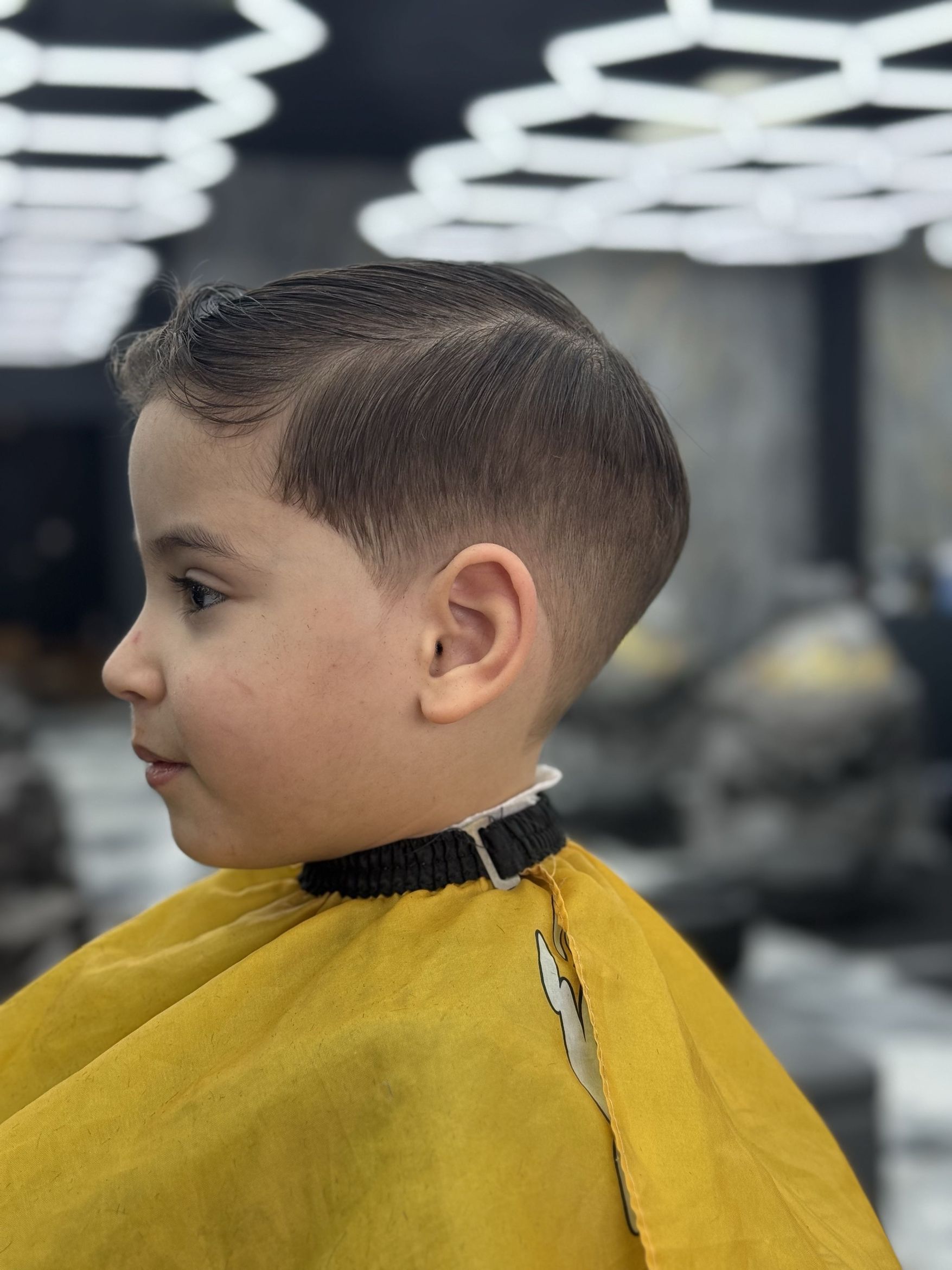
Middle recession, where the front band has thinned noticeably, wants commitment to shorter lengths. A close crop or a high, clean fade with a short top removes the in-between lengths that look uncertain. This is the stage men postpone hardest and benefit from most, because the short version almost always looks younger than the defended version.
Advanced recession, where front and crown are converging, wants the uniform answer: very short all over, or shaved. At that point length anywhere creates a frame around what is missing, and removing the frame is the entire fix.
The beard and edge details that help
As hair on top reduces, the rest of the grooming carries more weight, and that is an opportunity. A well-kept beard or a clean-shaven face, sharp line-ups, and tidy edges shift the impression from hair loss to grooming standard. Many men in Huntersville time the change deliberately: shorter on top, more attention to the beard, and the overall look sharpens rather than diminishes.
Scalp care joins the routine too. More exposed skin means sunscreen matters on Carolina summer days, and a moisturized scalp looks healthier than a dry one under short hair. These are small, cheap habits with an outsized effect once the hair stops doing the covering work.
What not to chase
Skip the strategies built on distance: growing one side long to sweep across, dark fibers and sprays as a daily dependency, and hairlines drawn by anyone other than your barber tidying the natural edge. Each works in one mirror, in one light, for one hour, and fails in daylight, wind, and swimming pools. The styles above work in all of those, which is the standard a Huntersville summer will apply whether you plan for it or not. A direct talk at La Perla Style Dominican Barbershop, naming the stage you think you are at, gets you the cut for that stage rather than the one before it.
Common questions
Does shaving my head make hair grow back thicker?
No. Shaving and buzzing change appearance, not follicles. Short hair reads thicker because the ends are blunt and even, which is a real visual benefit, just not regrowth.
When is a buzz cut the honest answer?
When styling compensation takes real time daily and still fails in daylight, or when recession is advanced front and back. Many men reach it a stage later than ideal and wish they had not waited.
Can a fade work with a receding hairline?
Yes, it is often the best option in the middle stages. Close sides restore proportion, and a short textured top stops asking the hairline to perform.
← All guides from La Perla Style Dominican Barbershop← Back to La Perla Style Dominican Barbershop