Curly hair plays by different arithmetic. It shrinks as it dries, sometimes losing a third or more of its wet length. It is drier than straight hair by structure, because scalp oils travel slowly down a spiral. And it punishes a barber who cuts it like straight hair with weeks of uneven results. La Perla Style Dominican Barbershop in Huntersville works with curly hair daily, in a Dominican cutting tradition with deep experience of curl patterns, and the differences below are the ones that matter most.
This comparison lays curly care beside straight-hair habit, because most bad curly cuts and most bad curly routines are just straight-hair practice applied to the wrong material.
Curly versus straight: where the rules flip
| Question | Straight-hair habit | What curly hair needs | Why |
|---|---|---|---|
| Cut it wet or dry? | Wet, combed flat | Often cut or at least finished and judged dry | Wet curls stretch out; cutting wet to a target length means a much shorter result once shrinkage hits |
| How much comes off? | Measured in inches removed | Measured smaller, checked after drying | Shrinkage can take a third or more of the length on tight curl patterns |
| Wash frequency | Daily shampoo is fine | Fewer washes, more conditioning | Curl structure keeps hair drier; daily shampoo strips what little oil arrives |
| Brushing | Brush to smooth | Fingers or a wide comb, usually when wet and conditioned | Dry brushing breaks the curl pattern into frizz and can snap dry strands |
| Cutting interval | Every two to three weeks for short styles | Often longer between shaping cuts | Curls grow out more forgivingly in shape, though ends still need regular attention |
| Product type | Gels and pomades for hold | Creams and leave-in conditioners for moisture first, hold second | Dry curls styled with stiff product turn brittle and dull; moisture is the base layer |
Shrinkage: the number to respect
Loose waves might shrink a little; tight coils can dry to half their stretched length. This is why a curly client and barber should agree the target in dry terms: how it should look on an ordinary day, not in the chair with wet hair combed down. A conservative first cut with a new barber is smart money. You can always take more off at the next visit; you cannot put the shrinkage back.
Shrinkage also explains the classic curly complaint that one side looks longer. Curls do not spring uniformly, so a cut that measured even when wet settles uneven when dry. Dry finishing, where the barber checks and evens the shape after drying, is the step that separates curly cuts that behave from ones that argue back by Friday.
Care between cuts in Carolina humidity
Moisture is the whole routine: condition generously, add a leave-in on wash days, and refresh with water and a little product rather than rewashing. Huntersville summers add a twist, because humid air swells curls into frizz by afternoon. The counter is not more product but the right amount of cream worked in while hair is still damp in the morning, sealing the curl before the air gets to it.
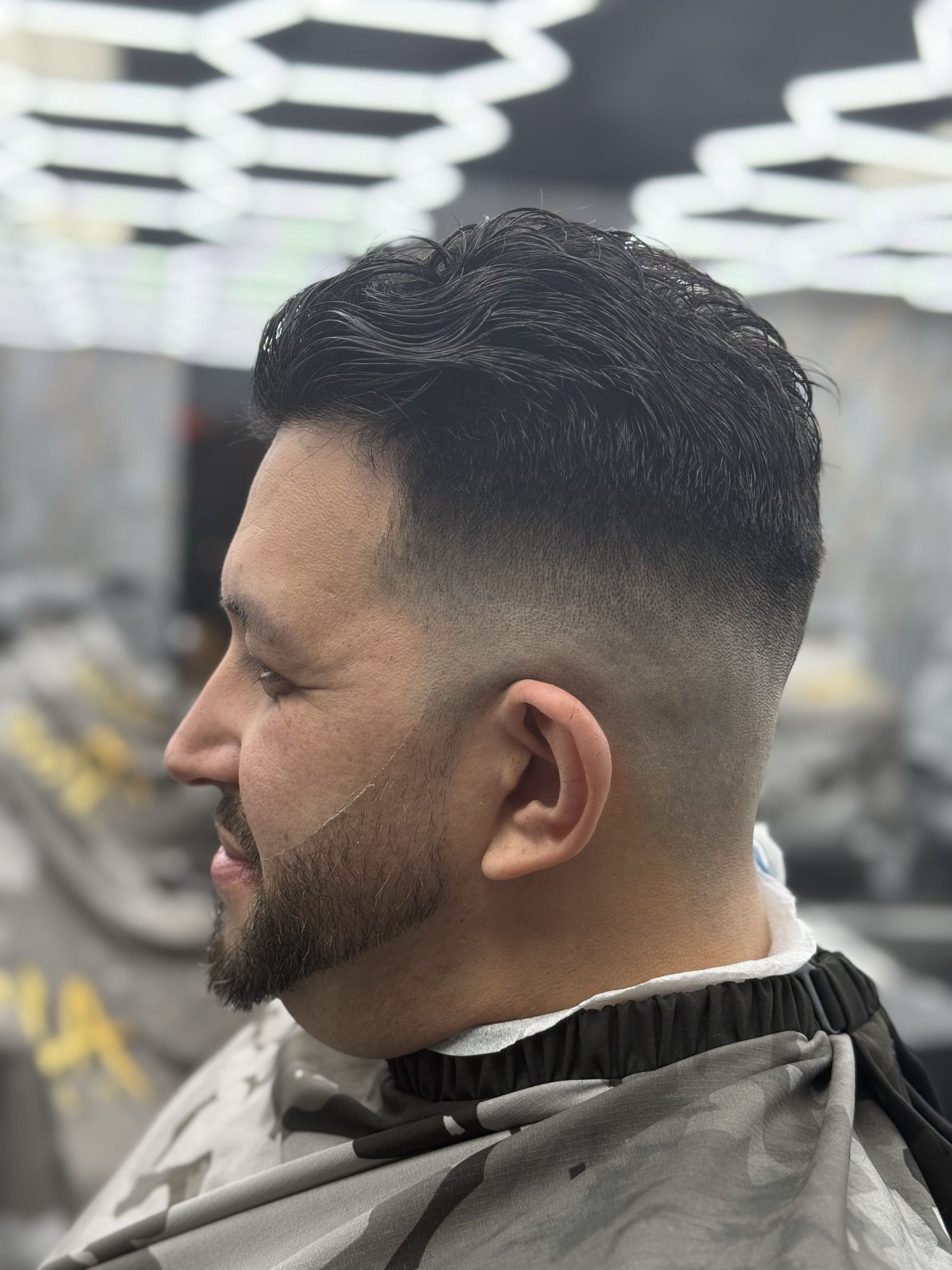
At the shop, the useful sentence is about your pattern, not a celebrity. Say whether your hair is wavy, curly, or coily, how it behaves in humidity, and how long you spend on it daily, which for most men should be under five minutes once the cut is right. A fade or taper on the sides with the curl left longer on top remains the most requested solution at shops like La Perla for a reason: the sides stay sharp for weeks while the top is allowed to be what it is.
Second-day curls have their own small routine, because sleeping flattens one side and loosens the pattern. In the morning, mist the hair lightly with water, scrunch the curls back into shape with your hands, and let it dry for a few minutes before judging it. Chasing a flattened curl with a brush or a full rewash usually makes the day worse; water and patience restore most of what the pillow rearranged, and the rest reads as natural texture anyway.
Common questions
Why does my curly hair look shorter than what the barber cut?
Shrinkage. Wet curls stretch during cutting and spring back as they dry, losing a third or more of their length on tighter patterns. Judging the cut dry prevents the surprise.
How often should curly hair be cut?
Shaping cuts often run four to eight weeks apart, longer than straight styles, because curls grow out softly. Faded sides still need their usual two-to-three-week upkeep if you keep them.
Should I wash curly hair every day?
Usually not. Rinse and condition more often than you shampoo; daily shampoo dries curls out further. Most curly heads do best with a few washes a week.
← All guides from La Perla Style Dominican Barbershop← Back to La Perla Style Dominican Barbershop